Will the OpenAI case put pressure on US courts to resolve internet jurisdiction?

Artificial intelligence behemoth OpenAI is currently defending a lawsuit in India, brought by that country’s domestic news agency ANI. The primary allegation is that OpenAI improperly used ANI’s copyrighted material to train its generative AI programs.

Open AI has raised a number of defenses, including that the courts of India have no personal jurisdiction over it. As every first-year law student learns, courts must have personal jurisdiction over a defendant before they can issue any binding order. For centuries, personal jurisdiction required that the defendant be physically present where the court was located. However, as 20th-century advances in transportation and communciation made it easier for people to cross state and national boundaries, courts adjusted the doctrine. It is now widely recognized that someone who enters a state or foreign country (even virtually) and causes mischief can be subject to that state or country’s jurisdiction, even if the defendant is not physically located there.

But there are still limits. The United States Supreme Court has insisted that a defendant must “purposefully avail” itself of the state where the lawsuit is filed, meaning that it must engage with the state in some intentional and deliberate way. An accidental or unforeseen connection to the forum will not do.

And thus human interaction through the internet–so wide-ranging and ubiquitous in modern life–poses a problem. An e-commerce giant like Amazon or eBay might be said to purposefully avail itself of a forum by offering goods for sale in that forum through the internet. The interaction is knowing, willful, and intentional, and the case for jurisdiction is easy. But what about a third-party seller who puts a product on eBay without thinking about a particular market or location? Is that purposeful availment? Or what if someone posts allegedly infringing or defamatory material on social media or a blog? Is that person subject to personal jurisdiction anywhere the site can be accessed?

The U.S. Supreme Court has never answered that question, at least not directly. It seems to want to answer the question, if the Justices’ questions during oral argument for other personal jurisdiction cases are any indication. But the Court seems unable to articulate a coherent and workable set of jurisdictional rules for the internet, and instead keeps deferring the issue. (Meanwhile, lower courts in the United States are doing the best they can to articulate meaningful principles of internet jurisdiction, with a common approach being to allow the exercise of jurisdiction when the defendant “directed electronic activity into a forum” with the “manifest intent of engaging with persons in that forum.” That captures the Amazons of the world who know where they are selling and shipping products, but probably not the ordinary Instagrammer who just posts something online.)

But the Supreme Court may not be able to wait much longer. The outcome of the OpenAI case in India may force its hand, or at least put greater pressure on it to reach a resolution applicable to American courts.

Continue reading “Will the OpenAI case put pressure on US courts to resolve internet jurisdiction?”

Did everyone miss the point of the Chief Justice’s Year-End Report?

Per tradition, Chief Justice John Roberts quietly released his 2024 Year-End Report on the Federal Judiciary on New Year’s Eve. Each year’s report briefly expounds on a single theme before concluding with a high-level statistical summary of the federal court’s work. The report typically garners relatively little attention, but this year was different. Some talking heads are convinced that the report is a direct jab at Donald Trump or J.D. Vance, or at least a warning to the country of the dystopian future heading our way on January 20. Others have suggested the report is an exercise in hypocrisy by a politicized Supreme Court that is unwilling to face criticism. Even the more dispassionate analyses have concluded that the report is, at its core, a condemnation of threats to judges or a call to protect judicial independence.

All of these have missed the point. The Year-End Reports are always terse, cautious, and carefully written, and the Chief Justice almost never directly states his views in full. One has to look for the hints. And this year the hints point to a real, if deliberately understated, concern about the erosion of respect for the rule of law and the country’s democratic institutions.

Continue reading “Did everyone miss the point of the Chief Justice’s Year-End Report?”

New information on threats to federal judges

Jason Leopold of Bloomberg News has unearthed fascinating, and highly distressing, details on some of the more than 2,300 threats that were made against federal judges (including Supreme Court Justices) in 2022 and 2023 alone. The details come from a FOIA request to the US Marshals Service, and reflect investigative reports after the threats surfaced.

In some instances, threats were just examples of idiots blowing off steam. Some were generally angry about a particular court decision. But others were far more serious, including allegations of a hitman plot against a Supreme Court justice and another suspect who appeared to have planned to attack an assistant public defender.

Wheeler on the limits of regulating the Supreme Court

Russell Wheeler of the Brookings Institute has posted an astute article about the Alito flag kerfuffle and the resulting cries for his recusal from two pending January 6-related cases. Wheeler sets out why the concepts of recusal and  judicial misconduct, at least with respect to the Supreme Court, are more legally complicated than Alito’s accusers would like.

There is a much deeper story here about why the Supreme Court has been so resistant to self-policing, especially since incidents like this one (and recent revelations about Justice Thomas’s gifted trips) would seem to erode public confidence in the Court. It is a complicated story worthy of a larger post, but I will note as a placeholder that in the Court’s calculus, a public commitment to specific recusal standards would likely reduce its legitimacy by inviting antagonists to turn recusal into an even more prominent political game. I will offer a more extensive explanation in a forthcoming post.

Judges continue to face direct threats from the public

Three stories came across the wire today. A Washington woman was sentenced to nineteen months in prison after she left multiple voice mails for the judge threatening to “put a bullet in [his] head.” A South Bend, Indiana man was arrested at his home after making “disturbing threats” against two local judges. And a Minnesota man was charged after posting a Facebook video in which he threatened a judge and contemplated shooting up a courthouse.

Each of these individuals seems to have been angry about their own legal problems, and in some instances intoxication or mental illness may have been a factor. But they also made these threats in a modern political atmosphere that devalues judges and the court system, and makes personal attacks on judges–whether physical or verbal–almost ordinary. Just a few years ago, the vehemence with which Donald Trump attacked individual judges by name was shocking. Now that tactic has been embraced by the Democrats, who are doing everything they can to cloud the legitimacy of the courts and sully the names (and safety) of jurists who do not fall in line with the progressive agenda.

Do politicians want blood on their hands? They are not responsible for every lunatic who wants to harm a judge, but they could stop creating such fertile ground for lunacy to blossom.

Supreme Court leak investigation ends with no culprit identified

Portico_-US_Supreme_Court_Building

The full statement from the Court, with the Marshal’s report and an additional statement from Michael Chertoff (as an independent analyst for the Court), can be found here. The key takeaway: “the [Marshal’s] team has to date been unable to identify a person responsible [for the leak] by a preponderance of the evidence.”

Preponderance of the evidence is, of course, the lowest standard of proof, equivalent to a likelihood of just over 50 percent. The failure of the investigation to identify any specific person under the preponderance standard is a clear signal that the Court does not ever expect to find the perpetrator.

This meek result is almost as stunning as the leak itself. And it carries several important consequences:

    • The Supreme Court’s reputation takes another hit. Leave aside the cynical partisan attacks based on one or two case outcomes. The Court itself has too many self-inflicted wounds in recent years: its refusal to adopt a Code of Ethics, its refusal to broadcast video of its arguments, and so on. Increasingly, the Supreme Court looks like a 19th century institution that has been uncomfortably transported to the 21st century. The failure to find the source of the leak makes the entire institution look inept.
    • Other court systems will suffer reputational fallout as well. Most people do not carefully distinguish between the Supreme Court and other courts or court systems in their daily lives.  Just as a strong reputation for the apex court will have benefits for other courts downstream, a reputational blow to the nation’s highest court will have the public thinking a bit more dismally about court systems in their own localities as well.
    • The Supreme Court will necessarily be a less open place to work. The Marshal’s report recommended–and former Secretary Chertoff endorsed–a number of measures to assure that a leak like this does not happen again. Many of these recommendations involving restricting access to draft opinions and other key documents, and instituting greater confidentiality measures. Fewer people will see drafts, and fewer opportunities will be available for reflection. There will still be prestige in clerking or otherwise staffing at the Supreme Court, but one has to wonder whether some qualified candidates will pass on the opportunity if it means giving up one’s cell phone when walking into the building and knowing that someone is always looking over your shoulder.
    • The Court will have to contend with an internal culture of distrust, at least for the foreseeable future. Just as potential law clerks and staff will bristle at being watched more closely, the Justices themselves will ask whether it’s worth bringing in so many unproven people for a year or two. The increased security will also necessarily make it harder for Justices to hammer out issues among themselves, whether directly or through law clerks as intermediaries.
    • The Court is likely to become even more resistant to sensible transparency proposals. As this blog has routinely documented, both legislators and the general public have put forward a variety of proposals to make the Supreme Court’s work more transparent and accessible. These proposals include better recusal practices and livestreaming oral arguments. But now that the Court is feeling on the defensive, it seems highly unlikely that it will voluntarily accede to transparency measures. This doesn’t mean that transparency measures are not coming eventually–I am confident that they are–but only that the Court will try to delay introducing them until it feels overwhelming pressure to do so.

Judges Behaving Badly

A guest post by Lawrence Friedman

Attention turned this spring to U.S. Supreme Court Justice Clarence Thomas following revelations of both the close relationship his wife, Ginni Thomas, a conservative activist, enjoyed with operatives involved in perpetuating the lie that Donald Trump won the last presidential election; and her express alignment with interest groups appearing before the Court. For his part, Justice Thomas has given no indication that he has or will recuse himself in cases in which his wife played some part.

But Justice Thomas is not the only jurist involved of late in questionable decisions regarding the limits of the judicial role. Back in 2018, as discussed here, Massachusetts state district court judge Shelley Joseph allegedly interfered with the enforcement of federal immigration law. The government maintains that, after presiding over the arraignment of an undocumented immigrant for whom Immigration and Customs Enforcement (ICE) had issued a detainer and warrant for removal, Judge Joseph helped the individual to avoid the ICE official waiting for him to exit the courthouse. The government charged her with conspiring to obstruct justice and obstructing a federal proceeding. In February, the U.S. Court of Appeals for the First Circuit rejected her request for interlocutory relief while her prosecution continues in the U.S. District Court for the District of Massachusetts.

More recently, there is the story of New York Court of Appeals Judge Jenny Rivera, under investigation by the state’s Commission on Judicial Conduct for refusing to adhere to the court system’s COVID-19 vaccination mandate. As the New York Times reported in March, Judge Rivera “has participated remotely in the court’s activities since the fall, when the state court system’s vaccination mandate took effect and unvaccinated employees were barred from court facilities.” The other six justices of the state’s highest court have continued to confer and hold oral arguments in person. It seems clear that Judge Rivera did not claim she was exempt from the mandate on either religious or medical grounds. Continue reading “Judges Behaving Badly”

The leak

I wish I could give the stunning leak of Justice Alito’s draft opinion in Dobbs its due today. For now, I will note that I agree with Bari Weiss’s take in its entirety, especially this part:

To my mind, though, the question of what this leak means for the institution of the Supreme Court is the most profound one. That is because it captures, in a single act, what I believe is the most important story of our moment: the story of how American institutions became a casualty in the culture war. The story of how no institution is immune. Not our universities, not our medical schools, not legacy media, not technology behemoths, not the federal bureaucracy. Not even the highest court in the land.

The Supreme Court was always the most cloistered governmental institution in America—the one where wisdom and precedent and reverence for our great constitutional tradition outweighed everything else. If there was something sacred that remained, this was it. Yes, there have been leaks from the Court before. But as Politico pointed out, last night’s leak was historic, and not in a good way: “No draft decision in the modern history of the court has been disclosed publicly while a case was still pending.”

I called up one of the smartest professors I know at one of the top law schools in the country, and he echoed that: “To my knowledge, it’s never happened before in the modern history of the court. It is the most serious possible breach.”

Serious, severe, shocking, he said. But in the end, not surprising. Why not? Here’s how he put it: “To me, the leak is not surprising because many of the people we’ve been graduating from schools like Yale are the kind of people who would do such a thing.”

What did he mean by that? “They think that everything is violence. And so everything is permitted.”

He went on: “I’m sure this person sees themselves as a whistleblower. What they don’t understand is that, by leaking this, they violate the trust that is necessary to maintain the institution.”

The Chief Justice has directed the U.S. Marshal to launch an investigation. This is a pivotal moment for the Court, as it works to quickly eradicate this source of institutional rot.

Belva Lockwood and the admission of women to the federal bar

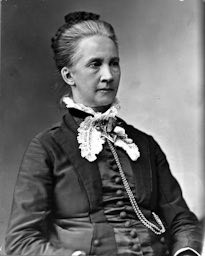
belva-lockwood-205x256

On this day in 1879, President Hayes signed into law a bill permitting women to practice before all federal courts, including the Supreme Court of the United States. The legislation was largely the handiwork of Belva Lockwood, a pioneering attorney who had lobbied Congress on the matter for years.

Lockwood fought tenaciously to advance her legal career, as well as that of others. When the National University School of Law (now George Washington University) refused to give her a diploma upon completion of her studies, she appealed directly to President Ulysses S. Grant. (She received her diploma a week later.) Even though local judges professed to have no confidence in her, she built a successful law practice in Washington, DC. And when she was rejected for admission to the Supreme Court bar on account of her gender in 1876, she worked to pass legislation that, three years later, opened the Court to all qualified women. Lockwood would argue her first case before the Supreme Court in 1880, and later sponsored for admission Samuel R. Lowery, the first black lawyer to argue a case before the Court.

The landmark 1879 legislation did not open all doors for women in the legal profession. It would be many more decades before most law schools would admit women, and even then on largely unequal terms.* And, of course, the push to create a fully equal workplace (in and out of court) continues today. But Belva Lockwood played a central role in creating a path for so many successful female lawyers over the past 150 years, and it is fitting that we remember her today.

* Here I once more have to kvell about the honor of teaching at New England Law Boston, which in 1908 became the first law school exclusively for women.

Roberts to Congress: Thanks, but we’ve got it all under control

For 2022, the Chief Justice leans into an alternative view of judicial independence. Will it be enough to keep Congress at bay?

Chief Justice Roberts’s 2021 Year-End Report on the Federal Judiciary, dropped (as always) on New Years Eve, struck a more substantive and somewhat edgier tone than in years past. The Chief Justice identified three particular areas of focus for the Judicial Conference of the United States in the coming year: addressing financial disclosure and recusal obligations for federal judges, monitoring new mechanisms for reporting and stopping workplace harrassment, and preventing undue forum shopping in patent cases.

All three of these issues have been the subject of regular, and sometimes intense, Congressional scrutiny in recent years. But the Chief Justice’s report largely rejects the prospect of legislative fixes. Rather, consistent with the federal courts’ approach to the workplace harrassment scandal when it first broke in 2017, Roberts assures his readers that the Judicial Conference is willing and able to handle each of these issues internally. 

It’s not to see why the Chief Justice would go this route. As this blog has routinely described, the federal courts (like all courts, and indeed all organizations) operate under constant pressure from their external environments. Neoinstitutional theory identifies three types of pressure: coercive (the need to comply with legislation and other government mandates), mimetic (the need to be in line with similar institutions in order to maintain legitimacy), and normative (the need to adhere to social and professional norms). The federal courts face all three types of pressure, but are particularly susceptible to coercive and normative pressures. If the federal judiciary is not seen as ethical and apolitical, it will face Congressional action and lose legitimacy with the bar, the media, and the public. 

There is no question that the pressure has been turned up in recent weeks. The Wall Street Journal‘s expose on federal judges who failed to recuse from cases in which they held a financial stake was a significant blow to the judiciary, and has invited Congressional hearings. Some in Congress have used the scandal as an opportunity to resurrect additional transparency proposals, including courtroom cameras and free PACER access. And, of course, the progressive effort to pack the Supreme Court looms in the background, along with the ongoing politicization of judicial confirmation hearings and the Supreme Court’s forthcoming decisions on abortion and gun rights. It is fair to say that the federal courts are currently facing more external pressure and scrutiny than at any time since the 1960s. Continue reading “Roberts to Congress: Thanks, but we’ve got it all under control”