
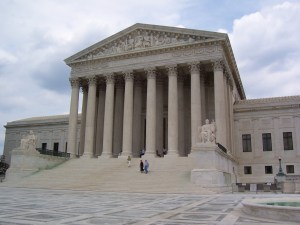
The mortifying state of our Supreme Court confirmation politics

The first of a series of posts about the politics of filling the Supreme Court vacancy created by the death of Justice Ruth Bader Ginsburg

So here we are, not even five years removed from the embarrassing political melee that followed the death of Justice Antonin Scalia, and the same movie is playing out in even more absurd fashion.

Senator Mitch McConnell (R-KY) is working the Republican back benches to ensure a yes vote for the President’s Supreme Court nominee — never mind that there is, as of yet, no nominee to vote on. This is the same Senator McConnell who refused to even hold a hearing for then-nominee Merrick Garland in 2016 on the flimsy pretext that it was too late into a election year. To call McConnell’s reversal hypocritical is an insult to hypocrisy.

Remarkably, the Democrats have acquitted themselves even more poorly. After hectoring the American public in 2016 with the smug insistence that the Senate must vote on the Garland nomination (using the Twitter hashtag #DoYourJob), and after four years of accusing the Republicans of “stealing” the seat by not holding a hearing for Garland, the Democrats now declare —with no apparent sense of irony — that they will do everything possible to prevent a vote on the as-yet-unnamed nominee. The charge has been led, most distressingly, by the Democrats’ own Vice Presidential candidate Kamala Harris, who previously pledged to shirk her Senate duties by refusing in advance to vote for any Trump appellate court nominee, and who now promises an extended vacancy crisis in connection with her efforts to raise campaign funds

How did we get here? Continue reading “The mortifying state of our Supreme Court confirmation politics”

Judicial Conference to push for legislation and funding to assure safety of federal judges

In the wake of the horrific shooting of Judge Esther Salas’s son and husband at her New Jersey home last month, the Judicial Conference of the United States has resolved to seek aggressive legislation and funding to better protect federal judges and their families. The Judicial Conference’s press release, which lays out its proposals, is here.

Let’s hope that Congress acts quickly to provide the necessary resources.

Fifth Circuit reverses holding that Louisiana’s judicial elections disenfranchise minority voters

Back in 2014, a number of groups led by the NAACP filed a federal lawsuit in Terrebonne Parish, Louisiana, alleging that the state’s “at large” system for electing judges systematically disenfranchised minority voters, in violation of the Voting Rights Act and the Fourteenth Amendment. The plaintiffs sought to replace the “at large” system with five geographic districts which, they argued, would increase the likelihood that a non-white judge would be elected.

After a lengthy pretrial process and a highly publicized bench trial, U.S. District Judge James Brady concluded in August 2017 that the “at large” system was unconstitutional, and ordered the parties to come up with an acceptable solution involving specific judicial election districts. When the parties were unable to do so, Judge Brady appointed a special master in December 2018 to draw a new district map.

Meanwhile, the defendants (essentially the State of Lousiana, through its Attorney General) appealed Judge Brady’s decision to the Fifth Circuit Court of Appeals. At the end of June, that court reversed Judge Brady, concluding that the plaintiffs had not met their burden under Thornburg v. Gingles and related Fifth Circuit precedent. Gingles requires that a party challenging an at-large voting system on behalf of a protected class of citizens demonstrate that “(1) the group is sufficiently large and geographically compact to constitute a majority in a single-member district; (2) it is politically cohesive; and (3) the white majority votes sufficiently as a bloc to enable it usually to defeat the minority’s preferred candidate.” Continue reading “Fifth Circuit reverses holding that Louisiana’s judicial elections disenfranchise minority voters”

Federal Circuit affirms PACER fee decision

After a two-and-a-half year wait, the Federal Circuit Court of Appeals has affirmed the decision of Judge Ellen Segal Huvelle in National Veterans Legal Services et al. v. United States. The plaintiffs in that case argued that the Judicial Conference of the United States and the Administrative Office of the U.S. Courts exceeded their statutory authorization by using PACER fees to fund internal court projects that were unrelated to the administration of the PACER system itself. (PACER is part of the federal courts’ electronic filing system, which allows the public to access most documents that are filed for a 10 cent/page fee.) The government argued that funding the additional projects did not exceed the court’s authority.

In March 2018, on cross-motions for summary judgment, Judge Huvelle split the difference, concluding as a matter of statutory interpretation that the courts had properly used PACER fees to fund certain projects–including the development of the electronci filing system itself–but had overstepped its bounds in using funds to provide electronic notice to jurors, assist with state court records in Mississippi, and other tangential projects. (I previosuly explored Judge Huvelle’s opinion, and the policies underlying the larger question of PACER fees, here.)

The Federal Circuit concluded that Judge Huvelle’s opinion “got it just right.” But it also added its own gloss on the relationship between the courts and the other branches of government, as seen through the lens of PACER revenue. Continue reading “Federal Circuit affirms PACER fee decision”

All 13 U.S. Courts of Appeal now feature live streaming

Many courts moved to some form of live streaming–either audio or video–since the start of the coronavirus pandemic. State courts have led the way, although federal courts have also made changes to improve public access and transparency. (Even the Supreme Court offered telephonic access to a few arguments.) Now, Bloomberg Law reports, all thirteen federal appellate courts offer live streaming.

The courts are still coy about whether they will maintain live streaming once the pandemic subsides. Some courts will certainly hold onto it — the Second and Ninth Circuits, for example, have already been live streaming for years. But hopefully other courts will also see the benefit — and associated lack of harm — with letting the public look in on the administration of justice.

The destruction at Portland’s federal courthouse

Sixty-one days of unbridled Antifa thuggery has destroyed the entire front of the Mark O. Hatfield United States Courthouse in Portland, Oregon. Graphic video from the local news below.

Disgusting and appalling.

Another Senator joins the federal judicial nomination Hall of Shame

Senator Josh Hawley (R-MO) said in an interview that week that “I will vote only for those Supreme Court nominees who have explicitly acknowledged that Roe v. Wade is wrongly decided.” He added, “By explicitly acknowledged, I mean on the record and before they were nominated.” Hawley championed his position as a way of correcting “an unbridled act of judicial imperialism,” the point “at which the modern Supreme Court felt it no longer had to follow the Constitution.”

Hawley is of course entitled to his views on the abortion debate, but his explicit refusal to vote for anyone who does not pass his narrow litmus test represents a direct assault on the Third Branch of government. The percentage of the Supreme Court’s cases concerning abortion are miniscule compared to the wide range of other matters it hears — matters that evidently are of no moment to Senator Hawley. Whether he is fully sincere in his pledge, or just making a political play, his ex ante refusal to even consider qualified nominees for the Court is a wholesale deriliction of his duty as a United States Senator.

Sadly, Hawley is not alone. This blog has taken to task Senator Kamala Harris (D-CA) for her equally repugnant vow not to vote for any of the President’s nominees, and Senator Mazie Hirono (D-HI) for her inappropriate questioning of judicial nominees.

Harris in particular has ambitions for a national political role. But such open hostility to the judiciary, and the readiness to treat a co-equal branch of government as a political plaything, should disqualify Hawley, Harris, and Hirono from any further national office.

How far can Congress probe the judicial thought process?

Over at the Volokh Conspiracy, Josh Blackman has a fascinating post (really, a series of posts) about the efforts of ten Democratic Senators to force two Eleventh Circuit judges to “explain” their involvement in Florida’s felon disenfranchisement cases.

The brief background is this: the Florida Supreme Court heard oral argument on a challenge to state legislation conditioning the restoration of a convicted felon’s right to vote on the payment of legal financial obligations. Two of the Justices on the court at the time, Robert Luck and Barbara Lagoa, had been nominated for seats on the Eleventh Circuit Court of Appeals. Both Justices asked questions during oral argument, but were confirmed to the Eleventh Circuit just weeks later. Accordingly, neither Justice had any role in the outcome of the case.

On July 15 the plaintiffs, having sought review in federal court, requested that both judges recuse themselves from the Eleventh Circuit’s deliberations. The request was grounded on the fact that the judges had merely asked questions during oral argument while on the Florida Supreme Court, even though they had taken no part in the decision. (This was factually reminiscent of the Ninth Circuit case of Yovino v. Rizo, involving a judge who had voted on a case but died before it was announced; here, however, the judges did not vote at all.)

Professor Blackman had a very sensible take whether recusal was necessary in the Eleventh Circuit case:

Judges are allowed to change their views. And that malleability is a good thing. I would be troubled if judges walked into arguments with a set predisposition, that could not be disturbed.

Yovino demonstrates that a Judge’s questions during oral arguments, and even a conference vote, are not “immutable.” Judges are allowed to keep an open mind till late in the game. These preliminary matters are not enough to question a judge’s impartiality. The only decision that counts is the final order. Judges Luck and Lagoa did not participate in the Florida Supreme Court’s published decision. Therefore, they are not disqualified.

But it’s 2020, and legal arguments aren’t good enough for the political class. Hence, the subpoenas. Blackman’s take (which you should read in its entirety) concludes:

I have serious doubts about whether Congress has the power to subpoena a judge to testify about internal judicial matters. I think Congress could justify that subpoena as part of an impeachment inquiry. But a general need for information to craft legislation would not be suitable.

I am not a constitutional scholar, but that strikes me as correct.

The intricacies of courthouse design

Law360 has a very interesting article about the design of courthouses, a task which must balance a number of overlapping and occasionally competing goals:

  • Conveying respect for the rule of law and the courthouse as the physical “home of the law” (reminiscent of Chief Justice Taft’s moniker of the Supreme Court building as the “Temple of Justice”);
  • Assuring access to justice for court users and observers;
  • Providing adequate working space for judges and court staff; and
  • Protecting the safety of everyone in the building.

The modern courthouse is simultaneously an office building, a processing station, a public space, a secular temple, a democratic icon, an entertainment complex, and a playing field. Capturing all of those needs in one building is a profound architectural challenge.

Some of the newer courthouses were designed with extra space and wiggle room to accommodate changing needs. I especially like the design of the federal courthouse in Boston (below), notwithstanding its questionable interior artwork. But older courthouses are increasingly bursting at the seams or in need of major retrofitting, and the funding may not be available.

Moakley courthouse

Interested readers should check out the wonderful, and coffee table-worthy, Representing Justice by Judith Resnik and Dennis Curtis, which tracks the history of American courthouses and the evolving goals behind their design.

Gunman opens fire at federal judge’s home, killing her son and wounding her husband

Several sources are reporting that a gunman came to the home of U.S. District Judge Esther Salas yesterday, and shot her son and husband when they answered the door. Her son, age 20, was killed and her husband was badly injured. Judge Salas was apparently in the basement at the time and was not hurt. The gunman, who was apparently dressed as a delivery driver, is still at large.

The motive for the shooting is unknown, although Judge Salas has presided over some high profile criminal cases since taking the federal bench in 2010. Unfortunately, attacks on judges and their families have happened before.

This is very sick, terrible news to start the week.